What actually works: evidence-based ways to prevent youth substance use
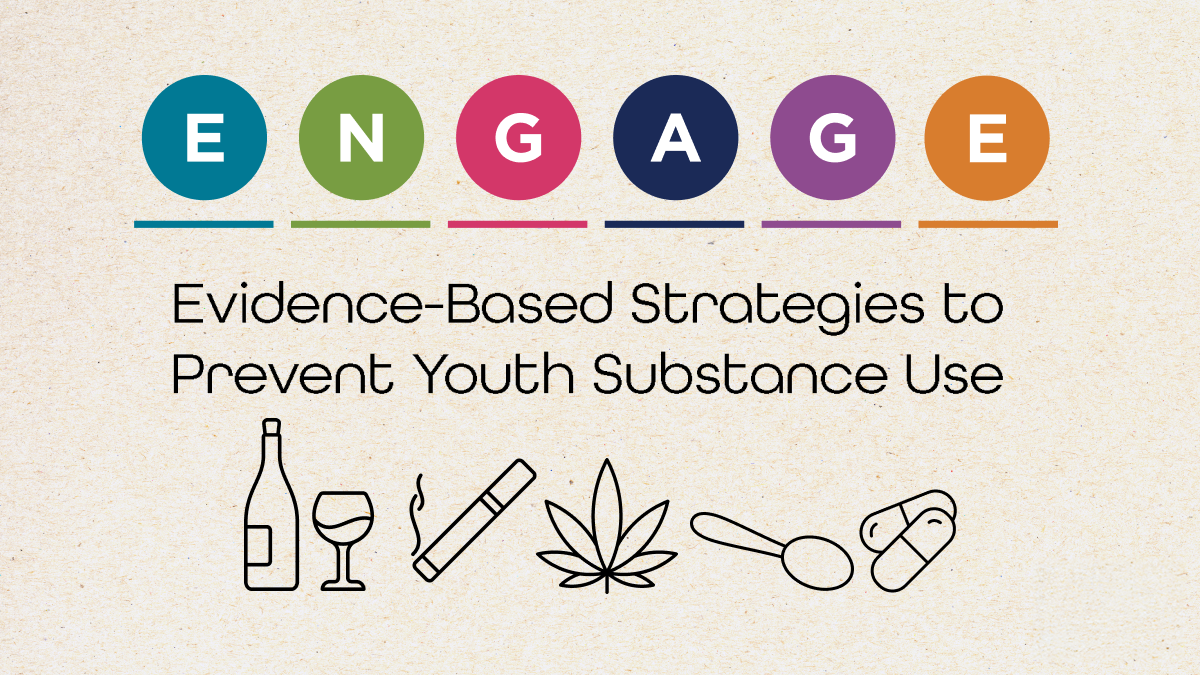
The CDC has boiled decades of research down to six strategies that genuinely help keep kids from starting to use substances. Here’s what they are — and why they line up so closely with the way SSAY works in Amador County.
Preventing youth substance use isn’t guesswork. Researchers have spent years studying what helps young people delay or avoid alcohol, marijuana, and other substances — and what doesn’t. The good news, and the whole point, is right there in the CDC’s own words: youth substance use is preventable.
To help communities act on that, the CDC created ENGAGE: Evidence-Based Strategies to Prevent Youth Substance Use — a guide that pulls together the approaches with the strongest track record. It’s built around six strategies, each backed by real evidence, that any community can tailor to its own needs. Here they are, in plain language.
Why prevention matters
The stakes are real. According to the CDC, in 2024 about 9% of eighth graders, 17% of tenth graders, and 26% of twelfth graders reported using an illegal substance in the past year. Using substances early in life is linked to impaired brain development, poorer performance and more absences at school, a higher risk of later substance use, and other lasting harms.
That’s the reason prevention is worth doing well — and worth doing together.
The six evidence-based strategies
1. Enhance knowledge and skills
Give young people accurate information and the real-life skills to act on it — largely through school-based programs that help kids make healthy decisions and handle peer pressure.
2. Nurture family environments
Strong, supportive families are one of the best protections a kid can have. This includes early-childhood home visitation and parenting-skills and family-relationship programs that help caregivers connect and set healthy boundaries.
3. Give youth access to resources and activities
Kids need somewhere to belong and something to say yes to. Extracurriculars, after-school programs, and mentorship give young people positive connections and a reason to steer clear of substances.
4. Amplify protective community environments
The whole community shapes a child’s choices. Community-level programs that build healthier, better-connected neighborhoods reduce the conditions that lead to substance use in the first place.
5. Guard efforts to lessen immediate and long-term harms
Some kids face violence or other adverse experiences that raise their risk. Services and supports for those youth — and treatment for those already showing early substance use — help prevent bigger problems down the road.
6. Encourage provider and health system engagement
Doctors and clinics have a role too. Addressing substance use during routine primary-care visits, and pairing screening with early intervention, catches concerns before they grow.
How this shows up in Amador
You might notice these six strategies sound a lot like what SSAY already does. That’s no accident. Our whole-community approach — bringing schools, families, healthcare, law enforcement, and youth to the same table — is built on the same evidence base the CDC points to. When we host a parent workshop, support an after-school program, or bring the community together for a panel like our recent Amador Youth Substance Trends event, we’re putting these proven strategies to work right here at home.
Prevention isn’t one program or one poster. It’s a lot of people, doing a lot of the right things, at the same time. The evidence is clear that it works — and so is the invitation to be part of it.
Be part of what works
Every one of these strategies takes people — parents, youth, teachers, healthcare workers, neighbors. If you want to help prevent youth substance use in Amador County, join the coalition or follow us on social to see what’s next. There’s a place for you.
Strategies drawn from the CDC’s ENGAGE: Evidence-Based Strategies to Prevent Youth Substance Use (Centers for Disease Control and Prevention, 2025). Read the full resource at cdc.gov. SSAY Coalition — Substance Solutions for Amador Youth — is a program of ATCAA, funded in part by a federal Drug-Free Communities (DFC) grant focused on preventing youth alcohol and marijuana use.